The quality of Lithium batteries have improved tremendously and the prices have dropped, therefore these batteries are commonplace nowadays. But Lithium-Ion and related batteries don’t have eternal lifespans. How do you determine how much life is left in batteries?
Eleshop sells different These can be used to test the quality of a battery within seconds. The internal resistance of the battery is tested with a standardized measurement. A high resistance indicates that the battery is at the end of its life.
The advantage of measuring the AC resistance of a battery is that it is extremely fast. The alternative is charging and discharging the battery. This can take hours instead of seconds.
The disadvantage of resistive testing is that it doesn't accurately provide the remaining capacity of the battery. The measurement result only shows that the battery is still good.
An example use case is a yearly check on 18650 Li-ion cells used in industrial equipment. When these cells fail, it brings down the industrial process. A regular check prevents this from happening as the cells can be replaced when they start degrading.
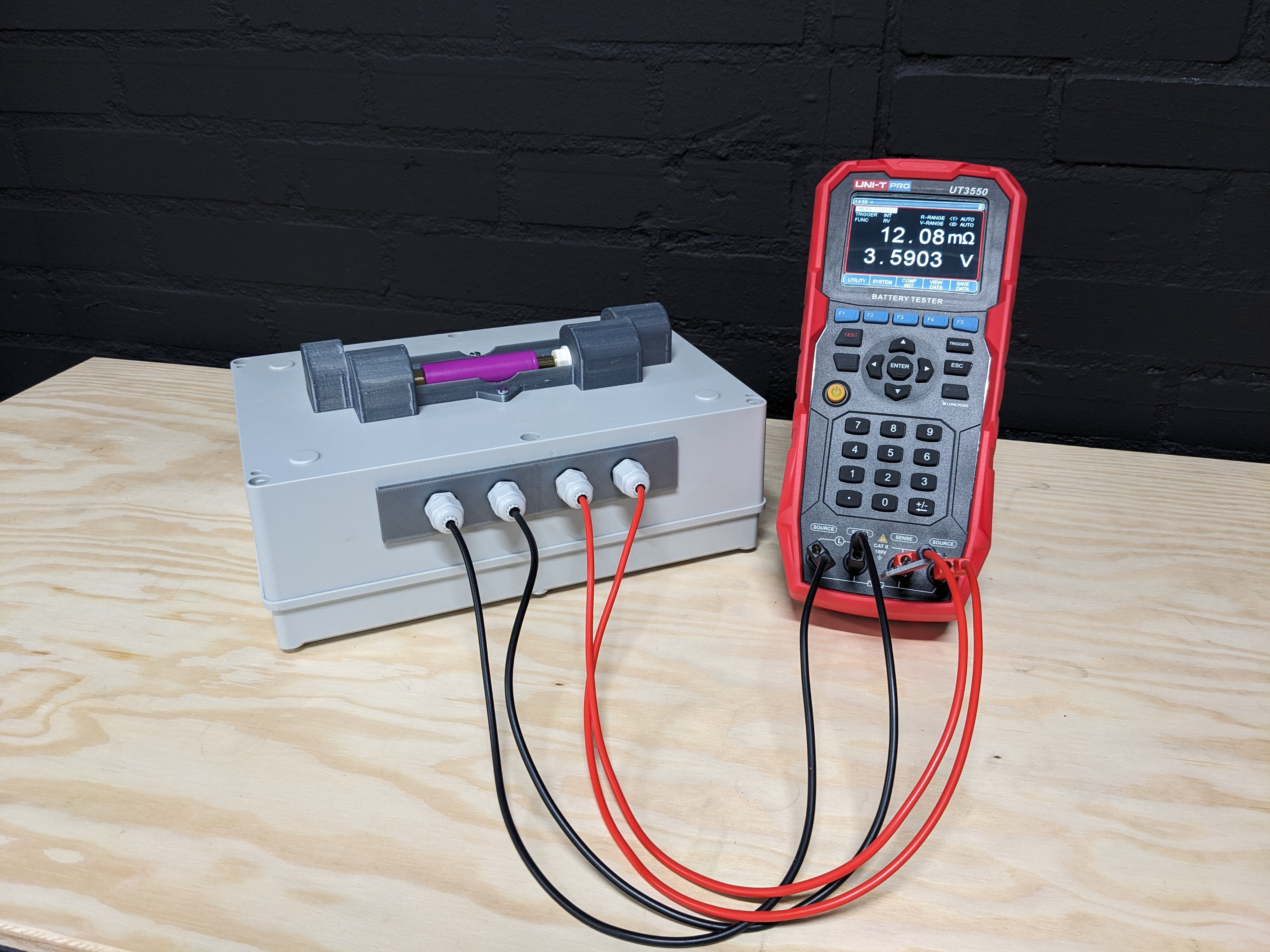
A typical resistance for good, high-current 18650 cells is 12mΩ. The battery tester can measure this within a second. When it measures a much higher resistance, for example 50mΩ, the cell is considered too worn to be used again and it is being replaced.
The need for 4-wire measurement
As the example shows, the typical resistance of a good cell is low. Contact resistance or conductive resistance is in most measurement setups easily more than 100mΩ.
Luckily there is a measurement method which eliminates contact and conductive resistance from the measurement result. This measurement method is called a Kelvin measurement or a 4-wire measurement.
All resistance testers use 4-wire measurement, but you also need special probes or clamps. With most testers, a set of clamps is included, but those don’t fit all batteries.
You can use 4-wire probes like but the measurement result depends on those probes on correct usage by the operator.
We recommend using a 4-wire battery holder for repetitive use. Measurements with such a holder are extremely consistent.
Custom 4-wire holder
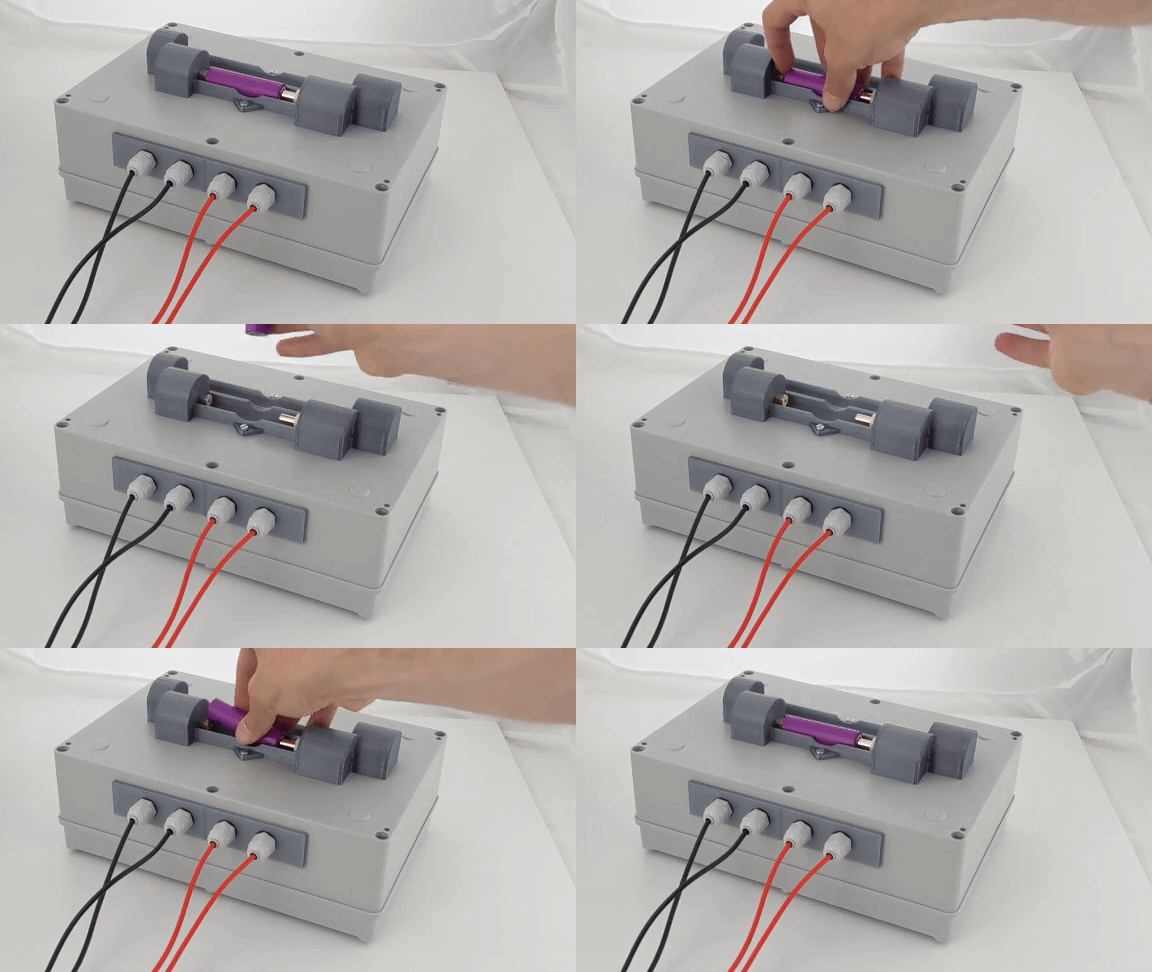
A customer of ours has to test double 18650 cells regularly. For this customer, we have developed a 4-wire battery holder which can test either the double 18650 in one slot or an 18650/ 21700 cell in the other slot. Below we show some photos of this holder in use.
If you require a custom holder for your 4-wire resistance measurements, please get in touch with us. We provide this service starting from €800.